
From Struggle to Success: Winning the Battle Against Withdrawal
From Struggle to Success: Winning the Battle Against Withdrawal
Unlocking Secrets to Conquer Cravings and Embrace a Smokefree Lifestyle
Sue Freeman RN | QuitCoach | Nicotine Recovery Advocate
Hey there, friend!
Quitting smoking can feel like riding a rollercoaster that never stops. It’s tough—many people who’ve struggled with nicotine addiction understand how challenging it is to quit. But here’s the good news: you’re not alone, and there is hope. You can break free from nicotine addiction and retrain your brain and body to live a smokefree life.
Making the decision to quit nicotine is a powerful choice. It affirms your worth, strengthens your commitment to health, and honors the value of your well-being. By choosing to prioritize your physical health and emotional self-care, you’re setting the stage for a truly transformative journey. This is the moment where your future self will look back and thank you for taking this bold and empowering step toward freedom.
But what about getting through detox, withdrawal, and the inevitable cravings? Why do some people not follow the expected course?
I know from personal experience that cravings can persist for years. After quitting for the final time, I craved intensely for six years. Surprisingly, my dad relapsed after seven years!
Numerous stories highlight that we remain ‘smoke-aholics’ long after quitting. Similar to how an alcoholic cannot have a drink, ex-smokers should avoid risking smoking again.
Fascinatingly, fMRI scans now reveal that ex-smokers brains still light up when they think about smoking even two years after quitting. Those ex-smokers who report cravings as a lifelong phenomenon, like me, need to do the work to undo the addiction in their brains and bodies. That’s the game-changer!
If you or someone you know is experiencing withdrawal symptoms and cravings eight weeks after you stop smoking or using nicotine products,, you may be experiencing prolonged withdrawal symptoms.

When you quit smoking or vaping, it takes 72 hours to remove the nicotine and its by-products from your body.
As you detox, you will withdraw as your body self-cleanses the vast array of chemicals, toxins, and heavy metals you have ingested, inhaled, and absorbed through your skin and the mucosa of your mouth and nose.
I have prepared the following chart to show you what will happen during this healing process which you may become aware of.
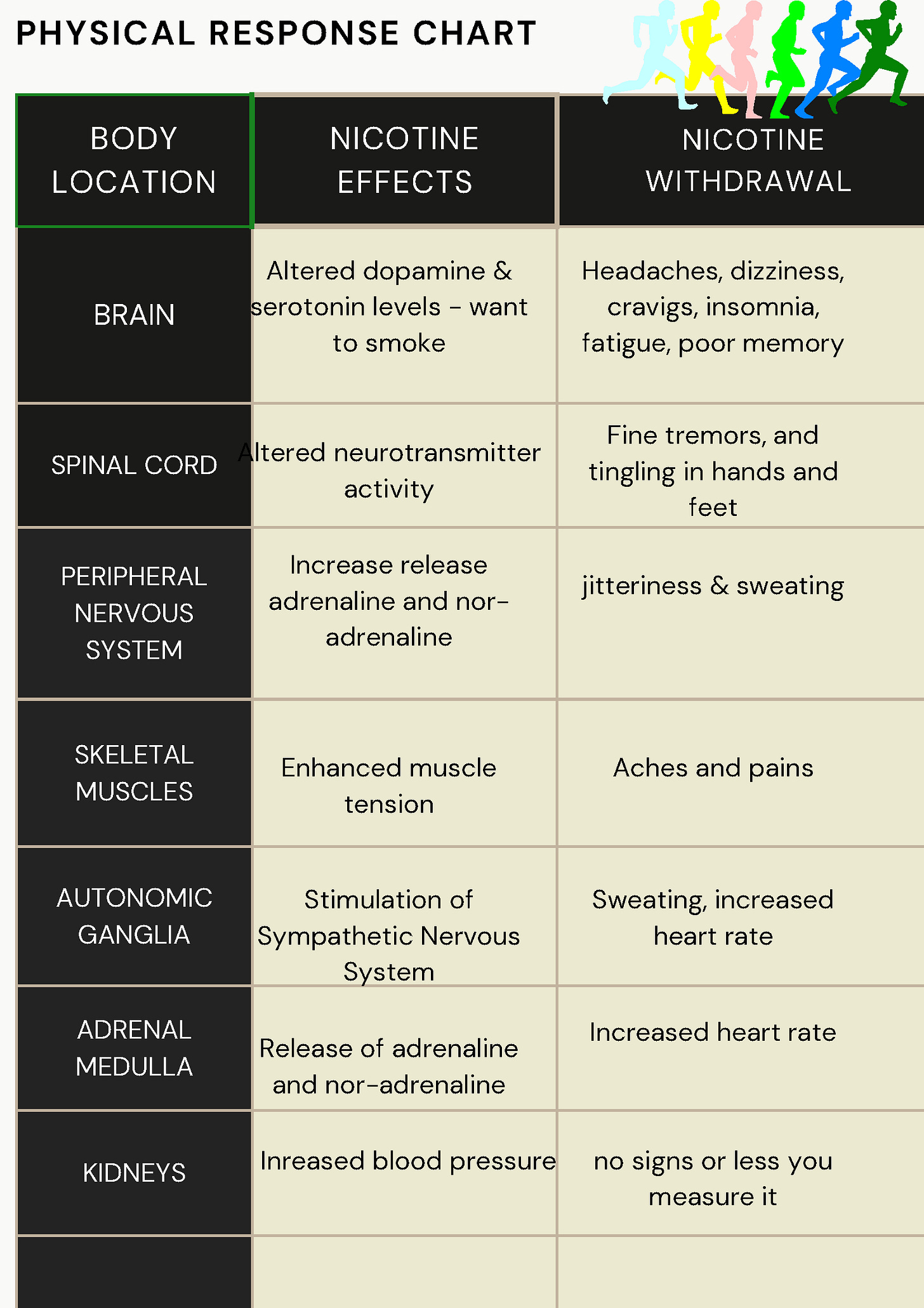
Chart: Physical Response to Nicotine Withdrawal by Quit Coach Sue
Everyone experiences withdrawal differently. How are you doing? Are you craving carbohydrates, feeling angry or irritable, headachy, dizzy, nauseous, unable to sleep, or experiencing nightmares? These yucky symptoms can be overwhelming.

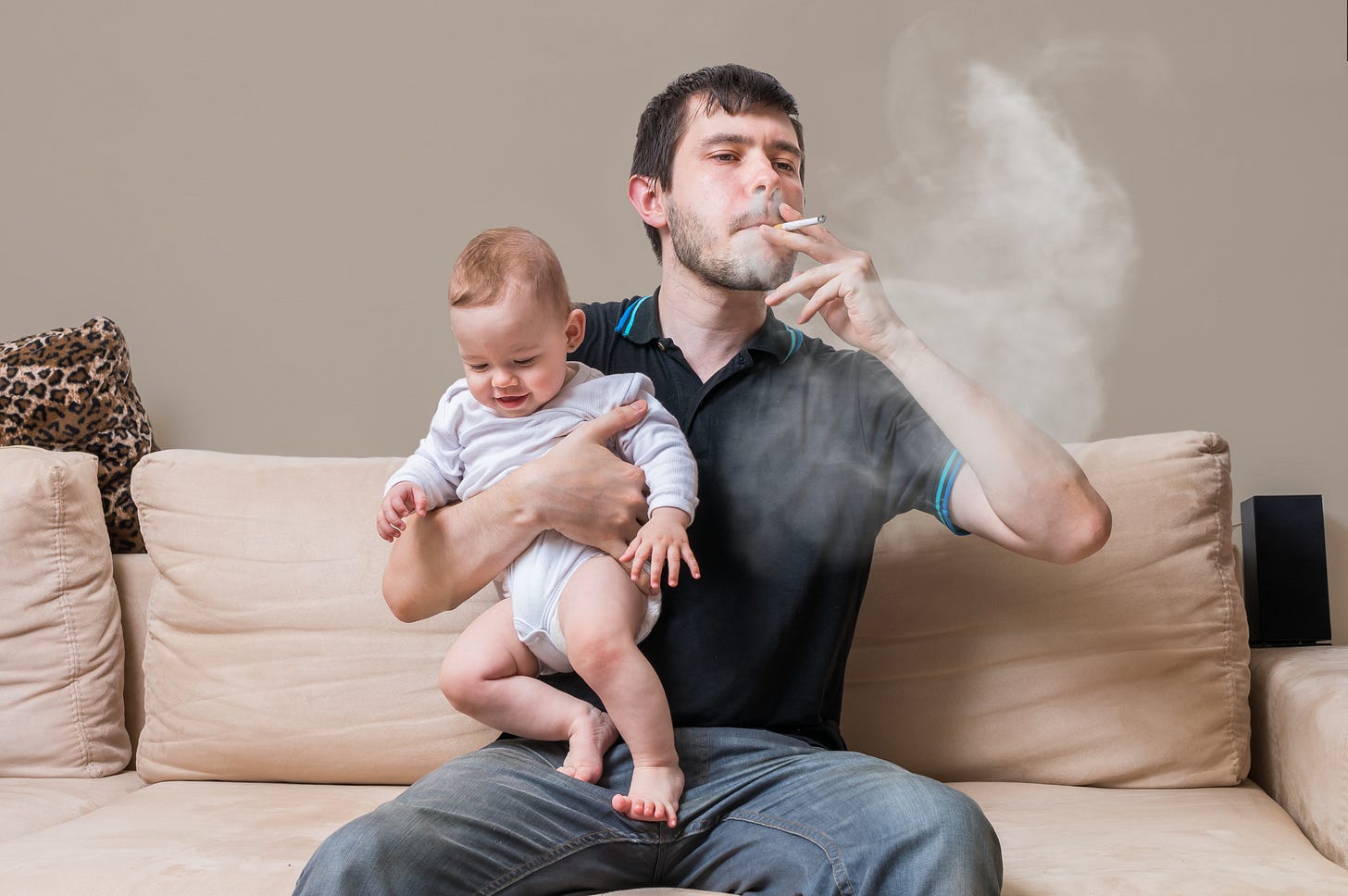
Kraken Images on Deposit Photos
Do you feel like you’ll never shake off the cravings for nicotine and are considering Nicotine Replacement or vaping as a solution? Don’t! Your body has a built-in self-healing system that you can learn to support. Don’t add poisons.
Well, here’s the good news:you can manage and treat the cause of these symptoms and break free from the cycle of addiction. The medical profession calls it Nicotine Substance Misuse, but it does not have to define you forever.
Think about it like this: you’re not just quitting smoking, snuff, dip, or vaping—you’re taking back control of your life. You’re reclaiming your free will and your ability to choose not to use nicotine. Say goodbye to that nasty monkey on your back and hello to a brighter, healthier future.
Now, I’m not saying it’s going to be easy. It’s going to take time, patience, and determination. But remember, you’re not alone on this journey. Reach out for support, celebrate small victories, learn everything you can, and keep your eyes on the smokefree horizon.
Keep going—you’ve got this! 🌟🚭
Here’s what some other quitters had to say about their experiences:
Quote: “I wish quitters would be more honest about how it really feels to quit, all their fails, slips, and relapses.”
Explanation: This quote underscores the importance of honesty and transparency when discussing the challenges of quitting smoking. It’s crucial to acknowledge the ups and downs and the need for support. Slips and relapses occur when the body remains addicted. Understanding what’s happening to your body during this process is essential for successful recovery. Never have a single puff it leads to another then another that’s how slips become relapses. It’s the lie that leads to disability, disease, and death. 2. Aaron 13 months Quit:
Quote: “The first three months f******* sucked. The first three days weren’t bad for me… But I quit. I’ve been quit for over a year now. It was still worth it.”
Explanation: This raw and candid quote vividly describes the intense physical and emotional struggles faced during the initial phase of quitting. It’s a reminder that the journey isn’t easy, but the long-term benefits are worth it. Anger may indicate hypoglycemia and other protracted withdrawal problems, which are treated. The Mindset of losing the ability to smoke may be in play, setting up resentment. This client needs to talk and reveal what’s going on.3. Kimberly 1yr 2months Quit:
Quote: “I remember sitting and nursing my 4-month-old and having INTENSE cravings, but my reason to ignore them was in my arms, so I focused on that… It’s all about your commitment to yourself, knowing it WILL improve.”
Explanation: This quote beautifully captures the enduring nature of cravings when the brain and body are addicted. Kimberly is relying on her external motivators and personal commitment to resist relapse. Quitting for the baby is admirable and will protect her in the short term. However, Kimberly needs to quit for herself. She is more important for to care for her baby truly she must first love herself.
Note: Four days after my babies were born, I returned to smoking. Unfortunately, I ended up contaminating our home, cars, and the outdoor areas where they played. It wasn’t until I fell ill with my second lung disease that I finally stopped polluting my young children.
Remember, these voices are real people who’ve walked the path you’re on. Their honesty, struggles, and triumphs can inspire and guide you. Keep going—you’re not alone! 🌟🚭
Detoxification and Freedom
Nicotine and its by-products leave your body within three days. By avoiding nicotine replacements and vapes and ensuring a clean environment at home, in your car, and at workspaces, you can finally free yourself from the nicotine monkey on your back.
Nicotine Withdrawal and Recovery
This is a critical period when your brain and body begin to cleanse themselves, removing the excess nicotinic neuroreceptors that build up during nicotine use. The stress that nicotine has placed on your brain and body will start to ease, and your anatomy and physiology will gradually return to normal over the next few weeks. This process usually takes two to four weeks, during which you may feel unwell, and your body may crave nicotine. Relax into these cravings
By three months, your neural pathways will resemble those of a non-smoker. However, remember that you will always be susceptible to nicotine, much like a ‘smoke-aholic.’
The golden rule is ‘not a single puff,’ or you risk relapse.
Managing the Challenges of Withdrawal: Treatment Strategies
Everyone experiences withdrawal differently; therefore, treat your symptoms when they arise and take them off your checklist when they resolve to track and celebrate your progress toward freedom from nicotine substance misuse.
Remember, damage to your health stops where recovery begins, even if you feel miserable – it’s a good sign.
I pledge to adhere to the following guidelines for a successful journey towards a smokefree life
☑️ Do not switch to a ‘sugar hit’ to replace nicotine, or you will sabotage your brain’s ability to reboot.
Avoid junk and ultra-processed foods.
Learn about Addiction Busting Foods in The Smokefree System: Taking Back Control program.
Your metabolism resets in 4 - 10 days if you avoid sugar as above and;
Factors that may cause you to gain weight include:
Your taste, sense of smell, and appetite improve – don’t go overboard eating.
Your metabolic rate temporarily drops by 10% as it was artificially elevated by smoking.
Your sluggish liver leads to feelings of craving or hunger.
High insulin levels caused by insulin resistance (common in smokers) may cause low blood sugar levels and feelings of weakness, shakiness, and confusion.
☑️Find healthy alternatives to manage stress, such as exercise, dancing, laughter classes, journaling, deep breathing, music, meditation, art, and visualization exercises.
Manage your desire to smoke with a growth mindset. Instead of dwelling on what you're giving up, focus on the bright, healthy future ahead. Adopting a growth mindset allows you to learn more about quitting, increasing your chances of success.
Don't resist the desire when it arises; go with the craving flow and let it pass over you like a wave. This approach helps counter feelings of deprivation and loss, empowering you to navigate cravings with greater ease.
Keep going, and stay committed to your smokefree journey! 🌟🚭
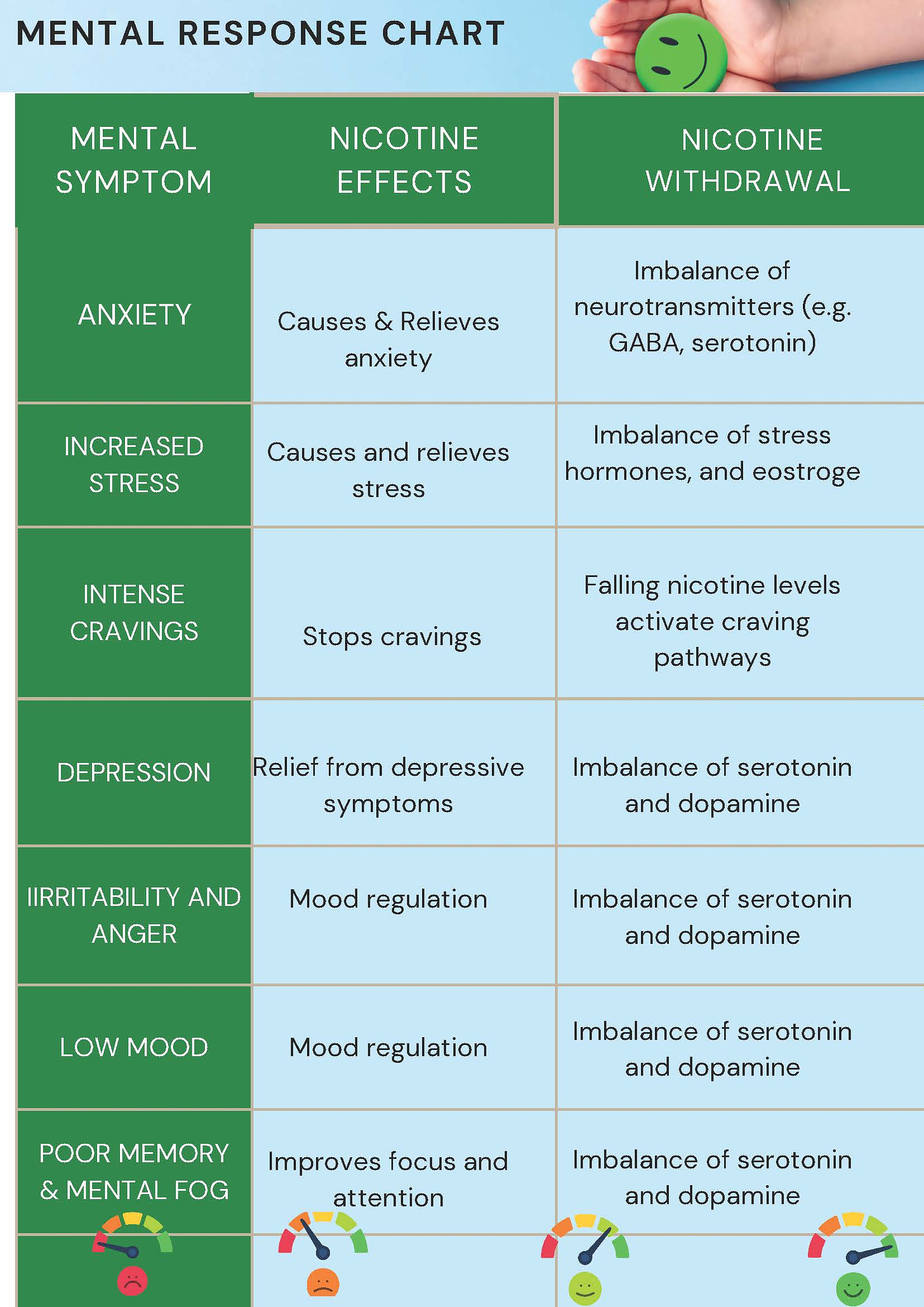
Chart: Mental Response to Nicotine Withdrawal by Quit Coach Sue
Prolonged Withdrawal Signs and Symptoms
Beyond the initial weeks of quitting, some individuals experience prolonged withdrawal signs and symptoms that persist for more than four weeks. These go beyond mere cravings and can significantly impact your well-being. Unmanaged stress exacerbates these symptoms, making it crucial to address stress during your smokefree journey.
The Impact of Chronic Stress
Chronic stress triggers a cascade of physiological responses, including:
Elevated cortisol levels
Inflammation
Impaired immune function
Disruptions in neurotransmitter balance
All of these factors contribute to increased susceptibility to illness and hinder your recovery from nicotine addiction. Recognize that stress management is not a luxury—it’s essential for promoting healing, resilience, and overall health.
Dealing with Cravings
When cravings strike unexpectedly, try the following techniques:
1. Breathe Deeply: Take a deep breath, then another. Establish a pattern of 4:4 (inhale for 4 counts, exhale for 4 counts. This pattern acts as a stress-kill switch in your brain.
2. Distract Yourself: Engage in an activity for at least 60 seconds to three minutes (or longer if needed) will redirect your focus away from the craving.
3. Identify and Neutralize Triggers: Understand what prompts your desire to smoke. Is it stress, boredom, or a specific situation? Once identified, work on minimizing or eliminating these triggers.
4. Engage Your Brain: Shift your thoughts to other matters. Your beautiful brain is capable of more than nicotine cravings!
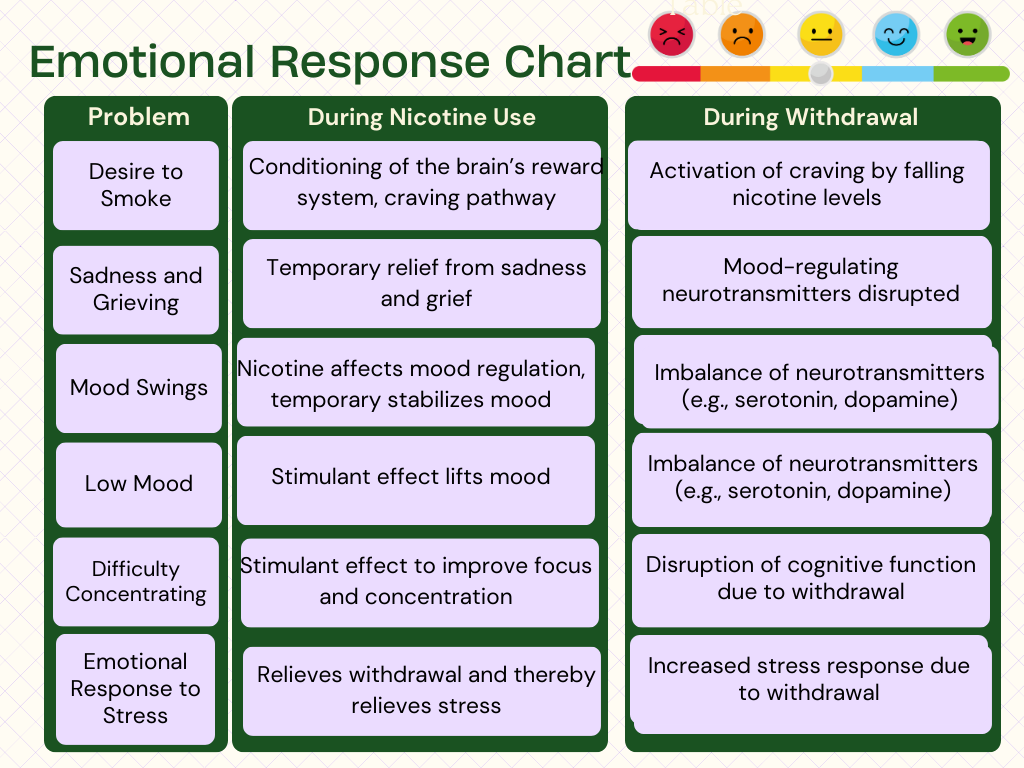
Chart: Emotional Response to Nicotine Withdrawal by Quit Coach Sue
Relapse Prevention: Freeze, Unfreeze, Refreeze
Relapse is a process, not an event. To prevent it, identify your smoking triggers and freeze them in time:
Freeze Moment: When a trigger (like hearing the phone ring) makes you want to smoke, pause. Ask yourself, “Where are my smokes?”
Unfreeze Moment: Change that thought. Instead, think, “I wonder who’s calling?” This is your “unfreeze” moment.
Refreeze Moment: If you like this new thought, keep and practice it. You’re changing a bad habit into a good one—a game of freeze tag against smoking!
The above example is based on Kurt Lewin's Change Theory. Nurses often use the Freeze, Unfreeze, and Refreeze methods. Try it out as you identify your triggers and find solutions so you won't be caught off guard. Triggers can be people, places, sights, smells, memories, emotions, loneliness, boredom - you name it.
But the bottom line is, after two hours since your last nicotine hit, your need for the next dose will be calling to you. This continues until you complete detoxification and withdrawal, and your body begins the work of healing and recovery.
Remember, you’re on a journey toward freedom. Stress will knock on your door, but you hold the keys to resilience.
Keep going—you’ve got this! 🌟🚭
CONCLUSION
In recent years, neuroscience has illuminated the intricate interconnectedness of our being, challenging traditional divisions of body, mind, soul, and spirit. This newfound understanding has profound implications for addressing challenges like smoking addiction.
For those embarking on the journey to quit smoking, it's essential to recognize the body's remarkable capacity for healing. Research suggests that for every year of smoking, the body may require up to two years for complete recovery. In our increasingly polluted world, minimizing exposure to toxins becomes paramount. Simple practices such as washing food thoroughly and opting for natural products can support healing.
As the author of 'How To Stop Smokin And Vaping For Good. Your Step-By-Step Guide,' I invite you to join me on a transformative journey toward lasting freedom from smoking and vaping. Rooted in spirituality, my program offers a personalized approach that harmonizes body, mind, and soul, empowering individuals to reclaim their health and well-being.
Stop playing the waiting game with your motivation to quit smoking or vaping – it's a trickster! Your readiness won't announce itself; it powers up with every step you take. Forget perfect timing; life won't pause for you. Embrace your future as an ex-smoker or vaper; you're equipped to handle life's curveballs with a clearer mind and healthier lungs. Take the leap now!
In hope and love
Quit Coach Sue
Quit Coach Sue, an expert nurse educator in smoking and vaping cessation, offers empathetic aid and scientifically-supported advice via digital resources to aid individuals in overcoming nicotine addiction and restoring their well-being.
